Why CFOs Are Reframing QA as a Strategic Investment
For decades, quality assurance (QA) in property and casualty (P&C) insurance has been viewed primarily as a compliance function, a back-office task to catch errors and maintain regulatory standards. A checkbox, if you will.
Today, QA is emerging as a strategic financial lever, capable of driving profitability, operational efficiency, and risk mitigation. Modern QA platforms from Athenium, such as teamthink and GaugeQuality, transform QA from a reactive oversight process into a system of financial intelligence, directly influencing loss ratios, expense ratios, combined ratios, and loss adjustment expenses (LAE), metrics that shape the carrier’s bottom line.
As the P&C industry faces increasing pressure from competitive markets, inflationary claims costs, rising claim severity, understated exposures, and evolving regulatory scrutiny, CFOs and executive teams are beginning to see QA not as a cost center but as a profit-enhancing function.
By integrating claims, underwriting, and compliance data into a QA platform, insurers gain actionable insights that prevent leakage, optimize operations, and enhance overall portfolio performance.
The Financial and Operational Impact of Today’s QA Solution
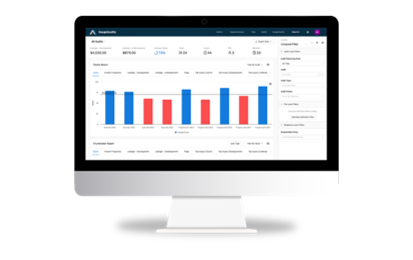
In claims and underwriting operations, today’s QA technology drives measurable improvements across every financial metric that matters to carriers. By identifying and correcting inefficiencies, QA contributes directly to improvements in loss ratio, expense ratio, combined ratio, and LAE, while providing a foundation for strategic decision-making.
Loss Ratio Improvement
The loss ratio, incurred losses divided by earned premiums, improves when QA reduces errors in claims handling and underwriting. In claims, QA identifies over-indemnification, unnecessary overpayments, and misapplied coverage. In underwriting, it flags misclassifications, missed exposures, and inconsistencies in risk selection that lead to incorrect premiums and excess risk.
By preventing these issues before they escalate, insurers protect profitability and maintain financial stability. On a $100M claims portfolio, even a 1–2% improvement in loss ratio can translate to $1–$2M in retained earnings annually.
From an industry perspective, loss ratio management is a growing challenge, particularly in commercial lines, where policy complexity and coverage variability are high. Carriers adopting advanced QA platforms can benchmark performance across products, geographies, and risk classes, providing actionable insights that drive smarter underwriting and claims decisions.
Expense Ratio Improvement
QA solutions streamline manual review processes, reducing time spent on spreadsheets, administrative duplication, and low-value manual audits. Automated workflows, advanced reporting, and analytics free staff to focus on high-value tasks such as trend analysis, coaching, and targeted remediation.
These efficiencies reduce operational costs, lower expense ratios, and improve throughput. For example, a mid-sized carrier implementing a QA platform can reduce manual review time by 40%, cut administrative overhead, and accelerate claim resolution by up to 15%. This combination improves operational efficiency, speeds up cash flow, and enhances customer satisfaction, providing a clear, demonstrative QA-driven ROI.
By integrating insights into training and process improvement, QA also accelerates underwriter ramp-up and claims adjuster effectiveness. This creates a virtuous cycle in which operational efficiency reinforces accuracy, which, in turn, drives profitability.
Combined Ratio Improvement
By simultaneously improving loss and expense ratios, modern QA platforms strengthen the combined ratio, the most critical metric of underwriting profitability. Standardized QA processes reduce variability across teams and regions, mitigating the risk of spikes in losses or expenses and creating a more predictable, stable financial performance.
Reduction in Loss Adjustment Expense (LAE)
LAE encompasses the total cost of claim handling, including legal fees, investigations, and settlement administration. QA identifies root causes of inefficiency, duplicated investigations, unnecessary litigation, or inconsistent documentation, and mitigates them without compromising outcomes. Lower LAE not only improves profitability but also enhances governance, operational transparency, and regulatory readiness.
Claims and Underwriting
Claims QA: Quantifying Leakage and ROI
Today’s QA enables insurers to measure, categorize, and mitigate claims leakage, the portion of claim payouts that could have been avoided. For instance, reviewing 17,000 claims annually at $9,900 each and detecting a 5% leakage rate with a 50% recoverable portion yields potential savings of over $4M. Additional ROI comes from reduced litigation costs, enhanced compliance, and improved customer satisfaction.
Beyond financial metrics, QA drives operational excellence. Standardized audit processes, data-driven insights, and systematic feedback loops empower teams to continuously improve accuracy, efficiency, and decision-making. For senior leadership, this creates a quantifiable link between QA activity and profitability, a key differentiator in today’s competitive market.
Underwriting QA: Reducing Leakage and Optimizing Portfolio Performance
In underwriting, QA uncovers hidden revenue opportunities and mitigates risk exposure. Platforms like teamthink and GaugeQuality identify misclassified policies, missed endorsements, and rating errors, helping carriers recover lost premiums, reduce compliance risk, and accelerate underwriter ramp-up. Improved straight-through processing rates, cleaner portfolio risk, and more accurate data for actuarial and reporting purposes drive long-term financial performance.
Industry trends further reinforce the value of underwriting QA. As insurers navigate volatile economic conditions, rising claim severity, and heightened scrutiny of risk selection, those leveraging QA in underwriting gain a competitive advantage: faster adoption of digital tools, more precise risk selection, and lower operational friction. This positions an insurer to optimize portfolios proactively rather than reactively, improving both top-line growth and loss ratio stability.
Preparing for 2026: Why QA Will Be Critical
As we embark on 2026, the P&C market faces significant uncertainty. Rising claim severity, economic volatility, and continued inflationary pressures are expected to strain underwriting profitability and operational efficiency. Carriers that do not proactively address these challenges risk increased loss ratios, higher expenses, and regulatory scrutiny.
- Escalating Claim Severity: Catastrophic events, social inflation, and higher replacement costs are projected to drive up loss ratios. QA platforms can help by identifying overpayments, misapplied coverage, and unnecessary claims costs before they impact financial results.
- Operational Inefficiencies Under Pressure: Economic constraints may limit staffing and resources, making legacy, manual claims and underwriting processes increasingly costly. QA systems streamline audits, reduce administrative duplication, and allow teams to focus on high-value work, lowering the expense ratio.
- Underwriting Risk and Revenue Leakage: With complex policies and volatile risk exposure, errors in classification or missed endorsements could significantly erode revenue in 2026. QA platforms flag these issues in real time, recovering premiums and ensuring accurate risk pricing.
- Heightened Regulatory and Compliance Expectations: Regulators are expected to increase scrutiny on claims handling and underwriting practices. Modern QA solutions provide standardized documentation, automated reporting, and actionable dashboards, reducing compliance risk and mitigating potential fines or litigation.
In 2026, carriers relying on fragmented audits or manual oversight will face greater financial and operational risk, while those implementing modern QA solutions will be able to mitigate loss leakage, reduce operational costs, and strengthen compliance, turning market challenges into competitive advantages.
Taking Action: Turning QA Insights into Strategic Advantage

Quality Assurance is no longer a support function. It is one of the only levers left that can directly and immediately improve financial performance in a P&C environment defined by rising severity, shrinking margins, and mounting regulatory pressure.
For CFOs, the value is not abstract. Efficiency gains across underwriting and claims translate into quantifiable, recurring savings: thousands of hours of manual review eliminated, faster claim cycle times, reduced litigation, lower training costs, and fewer corrections or writebacks.
Even tiny percentage improvements, a fractional reduction in overpayment, a small lift in retention, a slight drop in litigated files, create outsized financial impact across loss ratio, LAE, and operating expense.
This is the multiplier effect of modern QA: each improvement amplifies the next. Better underwriting accuracy improves risk selection and stabilizes the book. Stronger claims handling reduces leakage and litigation exposure. Better risk evaluation strengthens pricing, reserving, and portfolio analytics. And operational consistency across teams and regions reduces variability, the silent killer of profitability.
These gains compound, producing reliable, model-ready value that shows up on the P&L and strengthens long-term financial resilience.
This is why the timing matters. Every carrier in 2026 already knows that traditional cost-cutting has hit its limit; you cannot shrink your way to better ratios. Quality Assurance, however, unlocks new margin. Margin hidden inside leakage, inconsistency, avoidable rework, and poor data quality. And the math is straightforward: with your volumes, claims mix, and policy counts, a short financial analysis can quantify your specific opportunity, often revealing six- to seven-figure upside with rapid payback.
For CFOs, the question is no longer whether to champion the modernization of QA; it is whether to capture these gains now, while competitors are still reacting, or continue to defer action as market pressures intensify and the cost of delay grows. The next step is straightforward: move from responding to market forces to shaping financial outcomes. CFOs who act now build the operational leverage to protect margins and unlock value. Those who wait will face the same pressures in 2026, but without the tools to offset them.
Athenium’s QA solutions are leveraged by over one-third of the top 100 P&C and Life carriers and used by over 16,000 global licensed users.
To learn more about Athenium’s QA solutions, click the button below to schedule a consultation.